The African Pharmaceutical Industry: Growth and Transformation Introduction
Mushongago Admin
August 30, 2026
7 min read
37 Views
Africa's pharmaceutical industry presents significant opportunities for economic growth, healthcare development and industrial transformation. The continent's population was approximately 1.55 billion in 2025, providing a large and expanding market for medicines and healthcare services (United Nations, 2025). Pharmaceutical demand is expected to increase as a result of population growth, urbanization, greater healthcare access and the rising burden of both infectious and non-communicable diseases.
IQVIA estimated that Africa's pharmaceutical market, excluding COVID-19 vaccines, was approximately US$25 billion in 2022 and projected growth to around US$34 billion by 2027, representing an estimated five-year compound annual growth rate of approximately 6% (IQVIA, 2024). More recent IQVIA data continue to indicate sustained pharmaceutical market growth across Africa, although market size estimates vary depending on the countries and product segments included.
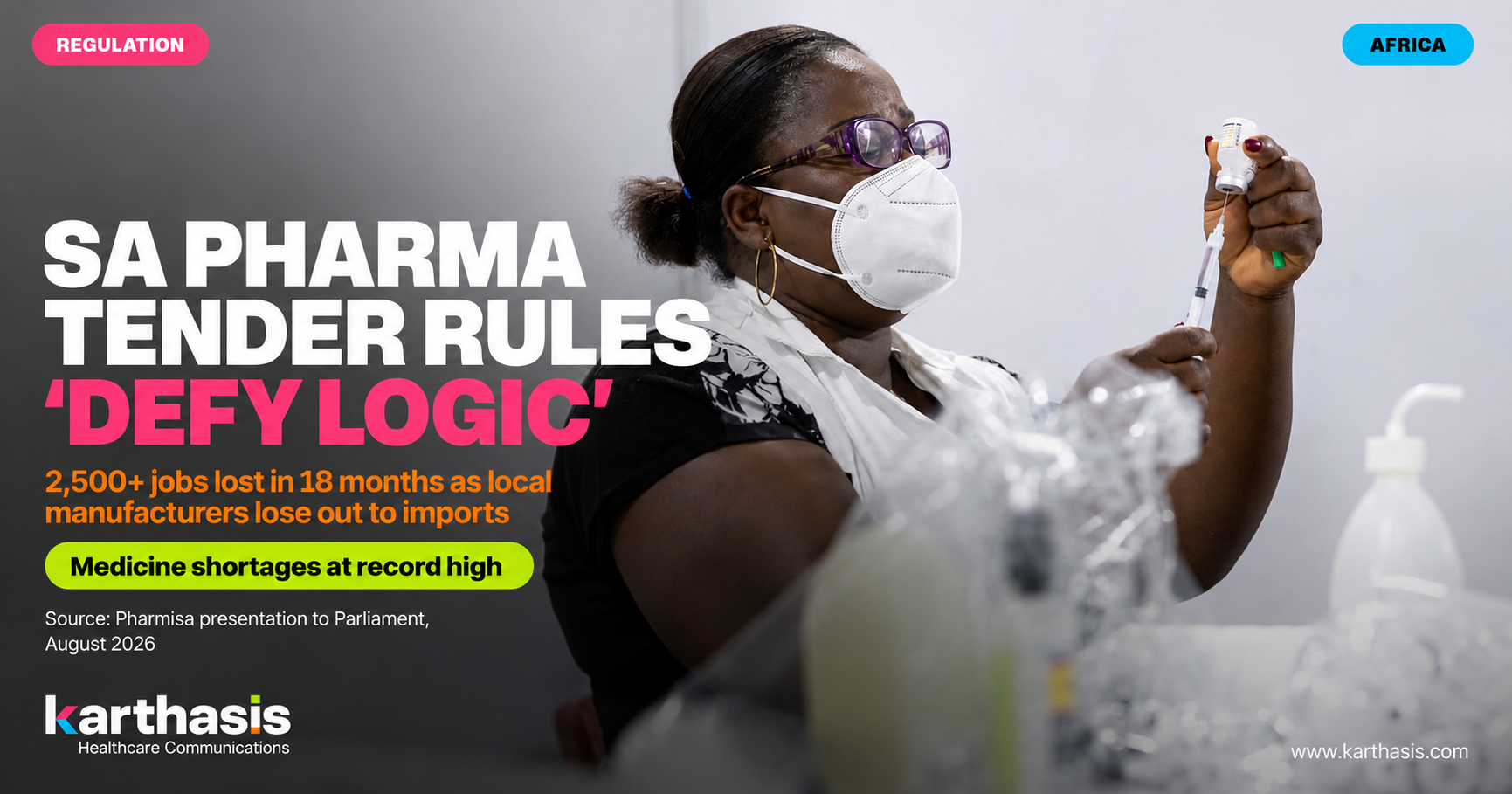
The COVID-19 pandemic highlighted the vulnerability created by Africa's dependence on external pharmaceutical supply chains. Consequently, strengthening local pharmaceutical production, regional supply chains, regulatory systems and access to technology has become an increasingly important policy priority (WHO, 2024).
Growth Potential in the African Pharmaceutical Market
Africa's pharmaceutical market has experienced substantial growth over the past decade. IQVIA estimated the African pharmaceutical market at approximately US$25 billion in 2022, with its base-case scenario projecting growth to approximately US$34 billion by 2027 (IQVIA, 2024). Earlier IQVIA market data also showed the market increasing from approximately US$21 billion in 2018 to US$27 billion in 2023, demonstrating sustained expansion despite the disruption caused by COVID-19 (IQVIA, 2023).
The market's long-term potential is supported by Africa's demographic expansion. United Nations data estimate the continent's population at approximately 1.55 billion in 2025, while Sub-Saharan Africa alone accounts for approximately 1.27 billion people (United Nations, 2025a; United Nations, 2025b).
Demand is also being shaped by the changing disease profile of the continent. Infectious diseases such as malaria, HIV/AIDS and tuberculosis remain important drivers of pharmaceutical demand, while non-communicable diseases such as cardiovascular disease, diabetes, cancer and chronic respiratory conditions are becoming increasingly significant. In the WHO African Region, non-communicable diseases accounted for 37% of all deaths in 2019, compared with 24% in 2000 (WHO Regional Office for Africa, 2024).
This combination of population growth, unmet healthcare needs and increasing disease burdens creates opportunities for pharmaceutical manufacturers, distributors, wholesalers, pharmacies, healthcare providers and digital health businesses.
Role of Generic Medicines
Generic medicines play an important role in improving access to affordable pharmaceutical treatment. Their lower cost compared with many originator medicines makes them particularly relevant to African healthcare systems, where healthcare expenditure and medicine affordability remain significant challenges.
The opportunity, however, extends beyond importing finished generic products. Africa's growing pharmaceutical demand creates opportunities for local formulation, manufacturing, packaging, quality assurance, distribution and pharmaceutical technology.
The development of local manufacturing has consequently become a major strategic priority. The WHO African Region adopted a Framework for Strengthening Local Production of Medicines, Vaccines and Other Health Technologies for 2025–2035, which aims to support countries in developing stronger local manufacturing ecosystems and improving access to quality-assured health products (WHO Regional Office for Africa, 2024).
The framework includes ambitious regional objectives for increasing the share of locally produced medicines and vaccines, while strengthening regulatory systems and encouraging investment in pharmaceutical manufacturing (WHO Regional Office for Africa, 2024).
Pharmaceutical Import Dependence
One of the industry's greatest structural challenges is Africa's continued dependence on imported medicines and other medical products. The WHO estimates that 70–90% of medical products consumed in Africa are imported (WHO Regional Office for Africa, 2021).
The situation is even more pronounced for some categories of pharmaceutical inputs. The WHO's 2025–2035 local-production framework indicates that Member States of the WHO African Region import approximately 70–100% of finished pharmaceutical products, while dependence on imported active pharmaceutical ingredients is estimated at 90–100% (WHO Regional Office for Africa, 2024).
This dependence exposes African markets to international supply disruptions, foreign-exchange constraints, transportation costs, geopolitical events and manufacturing disruptions outside the continent.
The COVID-19 pandemic demonstrated the consequences of these vulnerabilities, particularly when international demand for medicines, vaccines and medical supplies increased simultaneously.
Challenges and Opportunities
The African pharmaceutical industry faces several structural challenges, including:
Limited pharmaceutical manufacturing capacity
Dependence on imported medicines and active pharmaceutical ingredients
Fragmented pharmaceutical markets
Regulatory differences between countries
Limited access to financing for manufacturers
Weaknesses in pharmaceutical supply-chain infrastructure
Shortages of specialized technical skills
Foreign-exchange constraints
Limited research and development capacity
Unequal access to healthcare across countries and regions
However, these challenges also represent significant commercial opportunities.
Strengthening local pharmaceutical manufacturing could reduce dependence on imports while creating opportunities for manufacturers, contract manufacturers, wholesalers, distributors, pharmacies, logistics companies, technology providers and healthcare innovators.
Regulatory harmonization is another important opportunity. The African Medicines Agency has been established to contribute to strengthening regulatory cooperation and harmonization across the continent. In August 2026, African health ministers endorsed a new Regional Strategy on Regulation of Medical Products for 2026–2035, aimed at strengthening regulatory systems over the next decade (WHO Regional Office for Africa, 2026).
Digitization also has the potential to transform pharmaceutical supply chains. Digital platforms can improve medicine availability information, procurement, inventory management, price transparency, distribution and connections between manufacturers, wholesalers, pharmacies and patients.
Local Manufacturing and Pharmaceutical Self-Sufficiency
Africa's dependence on imported medicines has increased the importance of developing domestic and regional manufacturing capacity. The WHO's 2025–2035 framework identifies local production as an important mechanism for improving medicine access, strengthening supply chains and improving health security (WHO Regional Office for Africa, 2024).
Progress is already occurring in several countries. For example, WHO reported that Algeria produces approximately 82% of its pharmaceutical needs locally, illustrating the potential for African countries to substantially increase domestic production when supported by appropriate investment, policy and manufacturing infrastructure (WHO, 2025).
Nevertheless, pharmaceutical self-sufficiency should not necessarily mean that every African country produces every medicine domestically. A more realistic model could involve regional specialization and trade, where countries develop competitive manufacturing capabilities and supply neighbouring markets through stronger regional pharmaceutical supply chains.
Conclusion
Africa's pharmaceutical industry is positioned for substantial long-term growth. A population of approximately 1.55 billion people, rising healthcare needs, changing disease patterns and increasing demand for medicines provide a large underlying market (United Nations, 2025).
The pharmaceutical market itself is expected to continue expanding, with IQVIA projecting the African market to reach approximately US$34 billion by 2027 under its base-case scenario (IQVIA, 2024).
Nevertheless, Africa's heavy reliance on imported pharmaceutical products remains a major vulnerability. With approximately 70–90% of medical products imported, strengthening local manufacturing, supply chains, regulatory systems and regional cooperation will be critical to improving medicine security (WHO Regional Office for Africa, 2021).
The combination of population growth, unmet healthcare demand, generic medicines, local manufacturing, pharmaceutical distribution and digital transformation therefore presents significant opportunities for businesses and investors willing to participate in Africa's evolving healthcare ecosystem.
Africa's pharmaceutical transformation is unlikely to be driven by manufacturing alone. It will increasingly depend on the development of an integrated ecosystem connecting manufacturers, wholesalers, pharmacies, healthcare professionals, regulators, technology companies and patients.
References
IQVIA (2023) Global Medicine Spending and Usage Trends: Outlook to 2027. IQVIA Institute for Human Data Science. Available at: IQVIA Global Medicine Spending and Usage Trends (Accessed: 30 August 2026).
IQVIA (2024) Africa's next chapter: a continent of opportunity. IQVIA. Available at: IQVIA – Africa's next chapter (Accessed: 30 August 2026).
United Nations (2025a) UNData: Africa – General Information. United Nations Department of Economic and Social Affairs. Available at: UNData – Africa (Accessed: 30 August 2026).
United Nations (2025b) UNData: Sub-Saharan Africa – General Information. United Nations Department of Economic and Social Affairs. Available at: UNData – Sub-Saharan Africa (Accessed: 30 August 2026).
WHO (2025) Redefining the HIV response in Africa through local production of medicines and diagnostics. World Health Organization, 31 July. Available at: WHO – Local production of medicines and diagnostics (Accessed: 30 August 2026).
WHO Regional Office for Africa (2021) Report of the Regional Director 21: Chapter 2 – Manufacturing medical products in the African Region. World Health Organization Regional Office for Africa. Available at: WHO Africa – Manufacturing medical products (Accessed: 30 August 2026).
WHO Regional Office for Africa (2024) Framework for strengthening local production of medicines, vaccines, and other health technologies in the WHO African Region 2025–2035. AFR/RC74/6. Brazzaville: World Health Organization Regional Office for Africa. Available at: WHO Africa – Local Production Framework 2025–2035 (Accessed: 30 August 2026).
WHO Regional Office for Africa (2024) Noncommunicable Diseases. World Health Organization Regional Office for Africa. Available at: WHO Africa – Noncommunicable Diseases (Accessed: 30 August 2026).
WHO Regional Office for Africa (2026) African health ministers adopt new strategy to bolster medical regulatory systems. 26 August. Available at: WHO Africa – New medical regulatory strategy (Accessed: 30 August 2026).
©Karthasis & MushongaGo
IQVIA estimated that Africa's pharmaceutical market, excluding COVID-19 vaccines, was approximately US$25 billion in 2022 and projected growth to around US$34 billion by 2027, representing an estimated five-year compound annual growth rate of approximately 6% (IQVIA, 2024). More recent IQVIA data continue to indicate sustained pharmaceutical market growth across Africa, although market size estimates vary depending on the countries and product segments included.
The COVID-19 pandemic highlighted the vulnerability created by Africa's dependence on external pharmaceutical supply chains. Consequently, strengthening local pharmaceutical production, regional supply chains, regulatory systems and access to technology has become an increasingly important policy priority (WHO, 2024).
Growth Potential in the African Pharmaceutical Market
Africa's pharmaceutical market has experienced substantial growth over the past decade. IQVIA estimated the African pharmaceutical market at approximately US$25 billion in 2022, with its base-case scenario projecting growth to approximately US$34 billion by 2027 (IQVIA, 2024). Earlier IQVIA market data also showed the market increasing from approximately US$21 billion in 2018 to US$27 billion in 2023, demonstrating sustained expansion despite the disruption caused by COVID-19 (IQVIA, 2023).
The market's long-term potential is supported by Africa's demographic expansion. United Nations data estimate the continent's population at approximately 1.55 billion in 2025, while Sub-Saharan Africa alone accounts for approximately 1.27 billion people (United Nations, 2025a; United Nations, 2025b).
Demand is also being shaped by the changing disease profile of the continent. Infectious diseases such as malaria, HIV/AIDS and tuberculosis remain important drivers of pharmaceutical demand, while non-communicable diseases such as cardiovascular disease, diabetes, cancer and chronic respiratory conditions are becoming increasingly significant. In the WHO African Region, non-communicable diseases accounted for 37% of all deaths in 2019, compared with 24% in 2000 (WHO Regional Office for Africa, 2024).
This combination of population growth, unmet healthcare needs and increasing disease burdens creates opportunities for pharmaceutical manufacturers, distributors, wholesalers, pharmacies, healthcare providers and digital health businesses.
Role of Generic Medicines
Generic medicines play an important role in improving access to affordable pharmaceutical treatment. Their lower cost compared with many originator medicines makes them particularly relevant to African healthcare systems, where healthcare expenditure and medicine affordability remain significant challenges.
The opportunity, however, extends beyond importing finished generic products. Africa's growing pharmaceutical demand creates opportunities for local formulation, manufacturing, packaging, quality assurance, distribution and pharmaceutical technology.
The development of local manufacturing has consequently become a major strategic priority. The WHO African Region adopted a Framework for Strengthening Local Production of Medicines, Vaccines and Other Health Technologies for 2025–2035, which aims to support countries in developing stronger local manufacturing ecosystems and improving access to quality-assured health products (WHO Regional Office for Africa, 2024).
The framework includes ambitious regional objectives for increasing the share of locally produced medicines and vaccines, while strengthening regulatory systems and encouraging investment in pharmaceutical manufacturing (WHO Regional Office for Africa, 2024).
Pharmaceutical Import Dependence
One of the industry's greatest structural challenges is Africa's continued dependence on imported medicines and other medical products. The WHO estimates that 70–90% of medical products consumed in Africa are imported (WHO Regional Office for Africa, 2021).
The situation is even more pronounced for some categories of pharmaceutical inputs. The WHO's 2025–2035 local-production framework indicates that Member States of the WHO African Region import approximately 70–100% of finished pharmaceutical products, while dependence on imported active pharmaceutical ingredients is estimated at 90–100% (WHO Regional Office for Africa, 2024).
This dependence exposes African markets to international supply disruptions, foreign-exchange constraints, transportation costs, geopolitical events and manufacturing disruptions outside the continent.
The COVID-19 pandemic demonstrated the consequences of these vulnerabilities, particularly when international demand for medicines, vaccines and medical supplies increased simultaneously.
Challenges and Opportunities
The African pharmaceutical industry faces several structural challenges, including:
Limited pharmaceutical manufacturing capacity
Dependence on imported medicines and active pharmaceutical ingredients
Fragmented pharmaceutical markets
Regulatory differences between countries
Limited access to financing for manufacturers
Weaknesses in pharmaceutical supply-chain infrastructure
Shortages of specialized technical skills
Foreign-exchange constraints
Limited research and development capacity
Unequal access to healthcare across countries and regions
However, these challenges also represent significant commercial opportunities.
Strengthening local pharmaceutical manufacturing could reduce dependence on imports while creating opportunities for manufacturers, contract manufacturers, wholesalers, distributors, pharmacies, logistics companies, technology providers and healthcare innovators.
Regulatory harmonization is another important opportunity. The African Medicines Agency has been established to contribute to strengthening regulatory cooperation and harmonization across the continent. In August 2026, African health ministers endorsed a new Regional Strategy on Regulation of Medical Products for 2026–2035, aimed at strengthening regulatory systems over the next decade (WHO Regional Office for Africa, 2026).
Digitization also has the potential to transform pharmaceutical supply chains. Digital platforms can improve medicine availability information, procurement, inventory management, price transparency, distribution and connections between manufacturers, wholesalers, pharmacies and patients.
Local Manufacturing and Pharmaceutical Self-Sufficiency
Africa's dependence on imported medicines has increased the importance of developing domestic and regional manufacturing capacity. The WHO's 2025–2035 framework identifies local production as an important mechanism for improving medicine access, strengthening supply chains and improving health security (WHO Regional Office for Africa, 2024).
Progress is already occurring in several countries. For example, WHO reported that Algeria produces approximately 82% of its pharmaceutical needs locally, illustrating the potential for African countries to substantially increase domestic production when supported by appropriate investment, policy and manufacturing infrastructure (WHO, 2025).
Nevertheless, pharmaceutical self-sufficiency should not necessarily mean that every African country produces every medicine domestically. A more realistic model could involve regional specialization and trade, where countries develop competitive manufacturing capabilities and supply neighbouring markets through stronger regional pharmaceutical supply chains.
Conclusion
Africa's pharmaceutical industry is positioned for substantial long-term growth. A population of approximately 1.55 billion people, rising healthcare needs, changing disease patterns and increasing demand for medicines provide a large underlying market (United Nations, 2025).
The pharmaceutical market itself is expected to continue expanding, with IQVIA projecting the African market to reach approximately US$34 billion by 2027 under its base-case scenario (IQVIA, 2024).
Nevertheless, Africa's heavy reliance on imported pharmaceutical products remains a major vulnerability. With approximately 70–90% of medical products imported, strengthening local manufacturing, supply chains, regulatory systems and regional cooperation will be critical to improving medicine security (WHO Regional Office for Africa, 2021).
The combination of population growth, unmet healthcare demand, generic medicines, local manufacturing, pharmaceutical distribution and digital transformation therefore presents significant opportunities for businesses and investors willing to participate in Africa's evolving healthcare ecosystem.
Africa's pharmaceutical transformation is unlikely to be driven by manufacturing alone. It will increasingly depend on the development of an integrated ecosystem connecting manufacturers, wholesalers, pharmacies, healthcare professionals, regulators, technology companies and patients.
References
IQVIA (2023) Global Medicine Spending and Usage Trends: Outlook to 2027. IQVIA Institute for Human Data Science. Available at: IQVIA Global Medicine Spending and Usage Trends (Accessed: 30 August 2026).
IQVIA (2024) Africa's next chapter: a continent of opportunity. IQVIA. Available at: IQVIA – Africa's next chapter (Accessed: 30 August 2026).
United Nations (2025a) UNData: Africa – General Information. United Nations Department of Economic and Social Affairs. Available at: UNData – Africa (Accessed: 30 August 2026).
United Nations (2025b) UNData: Sub-Saharan Africa – General Information. United Nations Department of Economic and Social Affairs. Available at: UNData – Sub-Saharan Africa (Accessed: 30 August 2026).
WHO (2025) Redefining the HIV response in Africa through local production of medicines and diagnostics. World Health Organization, 31 July. Available at: WHO – Local production of medicines and diagnostics (Accessed: 30 August 2026).
WHO Regional Office for Africa (2021) Report of the Regional Director 21: Chapter 2 – Manufacturing medical products in the African Region. World Health Organization Regional Office for Africa. Available at: WHO Africa – Manufacturing medical products (Accessed: 30 August 2026).
WHO Regional Office for Africa (2024) Framework for strengthening local production of medicines, vaccines, and other health technologies in the WHO African Region 2025–2035. AFR/RC74/6. Brazzaville: World Health Organization Regional Office for Africa. Available at: WHO Africa – Local Production Framework 2025–2035 (Accessed: 30 August 2026).
WHO Regional Office for Africa (2024) Noncommunicable Diseases. World Health Organization Regional Office for Africa. Available at: WHO Africa – Noncommunicable Diseases (Accessed: 30 August 2026).
WHO Regional Office for Africa (2026) African health ministers adopt new strategy to bolster medical regulatory systems. 26 August. Available at: WHO Africa – New medical regulatory strategy (Accessed: 30 August 2026).
©Karthasis & MushongaGo
Advertise on MushongaGo
Reach thousands of healthcare professionals and patients daily.
Advertise Here
admin@mushongago.co.zw
0716460874